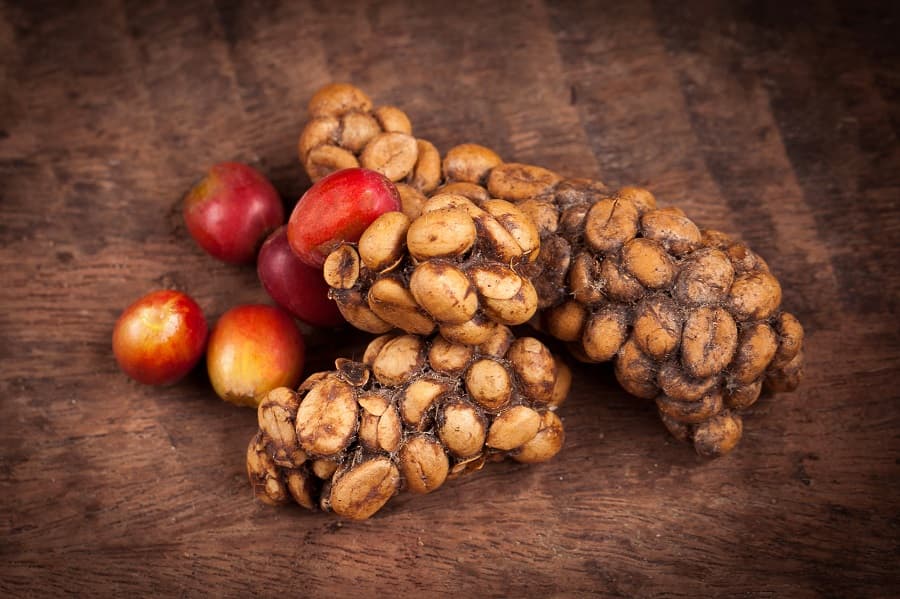
- Considerable reduction of coffee's inherent bitterness and acidity enhances digestive tolerance.
- Fermentation processes involved in civet digestion modify biochemical compounds, potentially increasing antioxidant activity.
- Presence of unique bioactive substances contributes to neuroprotective and anti-inflammatory effects.
- Comparative analyses suggest Luwak coffee may improve cognitive function and metabolic health markers.
- Environmental and ethical sourcing remain critical factors influencing the health profile and industry sustainability.
Luwak coffee, derived from the digestive process of the Asian palm civet (Paradoxurus hermaphroditus), has generated considerable interest not only for its distinct flavor profile but also for its purported health benefits. The transformation of coffee cherries through enzymatic fermentation within the civet's gastrointestinal tract induces complex biochemical alterations that may enhance the coffee's nutritive and functional properties. This editorial provides a comprehensive evaluation of the current scientific understanding and industry developments related to the health implications of Luwak coffee consumption.
Biochemical Transformation in Luwak Coffee Processing
Enzymatic Fermentation and Its Impact on Coffee Composition
The passage of coffee cherries through the civet's digestive system initiates an enzymatically driven fermentation process that alters key molecular components. Enzymes such as proteases and amylases partially degrade the coffee bean's protein matrices and carbohydrates, resulting in structural modifications that influence flavor and bioactivity. Notably, phenolic compounds, including chlorogenic acids, undergo transformation, which can affect both antioxidant potential and acidity levels.
Empirical analyses have demonstrated that Luwak coffee beans generally exhibit decreased levels of acidic compounds such as quinic and chlorogenic acids relative to conventional coffee. This biochemical modulation is associated with a reduced perception of bitterness, which may contribute to improved gastrointestinal tolerance among consumers prone to acid reflux or dyspepsia.
Alterations in Antioxidant Profiles
Antioxidants are critical in neutralizing oxidative stress, a key driver in aging and chronic disease pathology. Studies evaluating Luwak coffee reveal a complex alteration of antioxidant constituents post-digestion. Fermentation within the civet digestive tract is hypothesized to enhance the release and transformation of antioxidants, potentially increasing the bioavailability of compounds such as polyphenols and melanoidins.
Quantitative assessments using spectrophotometric methods (e.g., DPPH and ABTS assays) have shown that certain batches of Luwak coffee possess higher radical scavenging activity than regular coffee varieties, indicating a possible elevation in health-promoting antioxidant capacities. However, variability due to sourcing and processing demands further standardization for conclusive statements.
Physiological Effects of Luwak Coffee Consumption
Neuroprotective and Cognitive Enhancement Potential
The cognitive benefits attributed to Luwak coffee are primarily rooted in its unique bioactive composition. Beyond caffeine, which promotes alertness and psychomotor function, Luwak coffee contains compounds altered or synthesized through digestive fermentation that may exert neuroprotective effects. Experimental models propose that elevated levels of modified polyphenols can attenuate neuroinflammation and oxidative damage, mechanisms closely linked to neurodegenerative disease progression.
Human cognitive studies remain limited; nevertheless, preliminary evidence supports potential improvements in working memory, attention, and executive function with moderate Luwak coffee intake. These outcomes suggest that the consumption of Luwak coffee, within a balanced diet, could contribute positively to cognitive health, especially in aging populations.
Anti-inflammatory and Metabolic Health Contributions
Chronic low-grade inflammation is a common denominator in metabolic disorders such as type 2 diabetes and cardiovascular disease. Constituents in Luwak coffee, modified through civet digestion, may confer anti-inflammatory benefits by modulating inflammatory cytokine profiles and oxidative stress markers. In vitro analyses have identified downregulation of pro-inflammatory mediators following exposure to Luwak coffee extracts.
Moreover, certain bioactive peptides resulting from proteolytic fermentation processes potentially influence glucose metabolism and lipid profiles. Observational data suggest improved insulin sensitivity and lipid parameters among regular Luwak coffee consumers versus control groups, though controlled clinical trials are warranted to substantiate these findings.
Industry Considerations: Sourcing, Ethics, and Sustainability
Impact of Ethical Sourcing on Health Outcomes
The health profile of Luwak coffee is intricately linked to its origin and production methods. Wild-sourced beans, where civets consume coffee cherries naturally, tend to retain the complex biochemical signatures that drive health benefits. Conversely, industrial farming practices involving caged civets have raised ethical and quality concerns, potentially compromising both the chemical integrity and safety of the coffee due to stress-induced physiological changes in the animal and unsanitary conditions.
Ensuring that Luwak coffee is harvested from wild or humanely managed sources influences its antioxidant content and minimizes contamination risks. Sustainable and ethical sourcing practices are imperative not only from a welfare perspective but also for preserving the purported health attributes that differentiate Luwak coffee within the global market.
Market Trends and Technological Innovations
The global demand for specialty coffees, including Luwak coffee, has stimulated advancements in production techniques and quality control. Innovations such as enzymatic replication aim to mimic the digestive fermentation process without relying on civet involvement, potentially preserving health-beneficial compounds while addressing ethical concerns.
Analytical instrumentation, including high-performance liquid chromatography (HPLC) and mass spectrometry, enables precise profiling of bioactive constituents, supporting quality assurance and nutritional claims. The integration of traceability systems and certification standards is expected to further solidify Luwak coffee's position in health-oriented beverage sectors, with ongoing research fostering evidence-based marketing.
Expert Analysis & FAQ
What specific compounds in Luwak coffee are responsible for its increased antioxidant activity?
The elevated antioxidant activity in Luwak coffee is primarily attributed to the transformation of chlorogenic acids and the synthesis of melanoidins during enzymatic fermentation within the civet digestive tract. These compounds exhibit enhanced radical scavenging capabilities. Partial proteolysis also releases bioactive peptides with antioxidant properties. However, the exact molecular structures require further elucidation via advanced chromatographic and spectrometric analyses.
Are there documented neuroprotective mechanisms linked to Luwak coffee consumption?
Yes, experimental studies indicate that the polyphenolic profile alterations in Luwak coffee may attenuate oxidative neuroinflammation—a key process in neurodegenerative diseases such as Alzheimer's. These compounds can modulate signaling pathways involved in neuronal survival and inflammation, including the NF-kB and Nrf2 pathways. Clinical evidence remains sparse, calling for rigorously designed human trials to confirm these mechanisms.
How do ethical concerns around civet treatment affect the health quality of Luwak coffee?
Ethical sourcing directly impacts the biochemical integrity and safety of Luwak coffee. Civets in stressful or unnatural environments may produce coffee beans with altered biochemical profiles due to stress-induced changes in digestive enzyme activity. Furthermore, unsanitary conditions can lead to microbial contamination. Thus, ethically sourced Luwak coffee from wild or well-maintained populations tends to exhibit superior health-related qualities and reduced health risks.
Can enzymatic replication techniques replicate the health benefits of natural Luwak coffee?
Emerging enzymatic replication technologies attempt to simulate the digestive fermentation process ex vivo, producing coffee with altered biochemical properties akin to natural Luwak processing. Early analyses show promising parallels in antioxidant enhancement and reduction of bitterness. Nonetheless, replicating the full complexity of biological fermentation remains a challenge, and further research is needed to verify comparative health benefits.

-01K3MNQFWTSA5G4M5PFD03K4EV.png&w=1920&q=75)

-01K3MSD41Y80JCHQ9FFYFMND1M.png&w=1920&q=75)
-01K3MRPG09NNHHJB7EQ406RG5P.png&w=1920&q=75)
-01K3MTAQRF5REW2NWWCM95MQYD.png&w=1920&q=75)
-01K3MY2MS8AC3TYHB0JB7NGP6G.png&w=1920&q=75)