- Kona coffee's unique terroir and precise cultivation practices create a product with distinct sensory and chemical profiles.
- The industry faces challenges including geographic limitations, climate variability, and market authenticity control.
- Advances in agronomy and processing techniques are enhancing yield and bean quality without compromising traditional characteristics.
- Global demand for Kona coffee continues to grow, positioning it as a premium segment that commands higher market prices.
The cultivation and commercial prominence of Kona coffee represent a singular intersection of environment, agricultural science, and market dynamics within the coffee industry. Originating exclusively on the leeward slopes of Mauna Loa in Hawaii, Kona coffee has gained recognition beyond American borders for its distinctive flavor profile and production exclusivity. The scientific underpinnings of Kona coffee's quality emanate from its terroir—an intricate matrix of volcanic soil composition, altitude, microclimate, and proprietary agricultural techniques that collectively influence bean morphology and biochemical composition.
Environmental and Agronomic Factors Influencing Kona Coffee Quality
Terroir Characteristics
The volcanic soils of the Kona district possess high porosity and mineral content, factors that significantly impact nutrient uptake and root development in Coffea arabica plants. Moderate elevation, typically ranging from 200 to 800 meters above sea level, coupled with consistent temperature gradients and well-distributed rainfall, establishes optimal conditions for coffee cherry maturation. Soil analyses indicate high levels of iron and calcium, essential for enzymatic processes influencing caffeine and chlorogenic acid synthesis. Furthermore, the diurnal temperature variation contributes to slower bean maturation, enhancing the accumulation of sugars and organic acids that define the cup profile.
Climatic Conditions and Growth Cycles
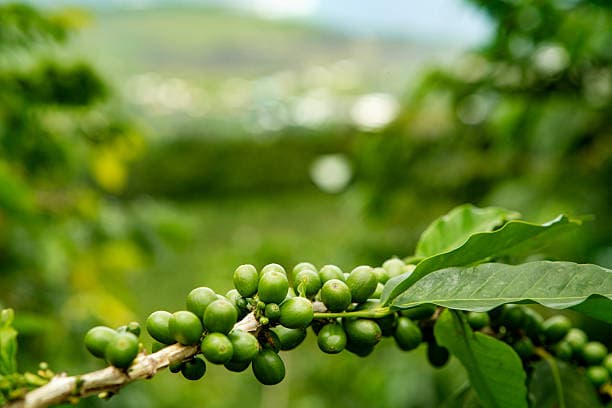
Kona coffee plants require a precisely balanced microclimate characterized by a dry season conducive to flowering followed by a wet season fostering fruit development. Temperature stability around 18–24°C ensures metabolic efficiency without stress-related phytochemical deviations. The rainfall pattern, averaging 1000–1270 mm annually, is critical in determining flowering intensity and bean uniformity. Variability in climatic parameters directly correlates with alterations in secondary metabolite profiles, which affect both taste and aroma. Research focused on climate adaptation strategies employs predictive modeling to mitigate risks from increasingly unpredictable weather patterns attributed to global climate change.
Agricultural Practices and Post-Harvest Processing
Cultivar Selection and Farming Techniques
Kona coffee farmers predominantly cultivate selective Arabica cultivars such as Typica and Caturra, chosen for their adaptability to local environmental conditions and desirable organoleptic traits. Planting density is strategically maintained at approximately 1,200 to 1,500 trees per hectare to optimize light interception and resource allocation. Integrated pest management protocols minimize chemical inputs, preserving soil microbiome integrity and coffee bean quality. Pruning and shading practices are precisely managed to regulate vegetative growth and fruit yield balance, with a trend toward experimental agroforestry combinations to promote biodiversity and ecosystem services.
Post-Harvest Processing: Drying and Fermentation Dynamics
The post-harvest phase is critical in developing and retaining the definitive flavor notes associated with Kona coffee. Traditional wet processing involves depulping ripe cherries, followed by controlled fermentation to remove mucilage layers. Temperature and duration of fermentation are closely monitored to prevent over-fermentation, which can impart undesirable organoleptic characteristics. Subsequent drying reduces moisture content to a target range of 10–12%, preventing mycotoxin formation and preserving compound stability. Advances in drying technologies including mechanical and solar-assisted methods are being calibrated to balance efficiency with preservation of the coffee's nuanced flavor profile.
Industry Dynamics and Market Considerations
Geographic Indication and Authenticity Control
Kona coffee's exclusivity is maintained through stringent certification mechanisms grounded in geographic indication (GI) designations. However, the high market value incentivizes adulteration and misrepresentation, compelling regulatory frameworks to employ molecular authentication methods, such as DNA barcoding and stable isotope ratio analysis. These technologies provide precise verification of origin, ensuring consumer trust and protecting producer livelihoods. The complexity of enforcing GI protections across global trade networks necessitates collaborative governance involving government agencies, industry associations, and scientific institutions.
Global Market Trends and Economic Impacts
Demand for high-quality specialty coffees, particularly Kona coffee, has sustained upward trajectories in domestic and international markets. Premium pricing structures reflect consumer willingness to pay for origin-specific flavor profiles and sustainable production. Economic analyses indicate that productivity improvements and branding efforts directly influence profitability for Hawaii-based farmers. Export volumes, though limited by geographic scope, demonstrate resilience against commodity coffee price fluctuations. Market segmentation emphasizes direct trade relationships and traceability, aligning with evolving consumer preferences for ethical and transparent sourcing.
Expert Analysis & FAQ
What biochemical compounds distinguish Kona coffee from other Arabica coffees?
Kona coffee typically exhibits elevated levels of sucrose, chlorogenic acids, and specific volatile aroma compounds such as linalool and 2-methylbutanal. These biochemical markers arise from unique terroir conditions and post-harvest processing. For example, higher chlorogenic acid concentrations contribute to antioxidant activity and influence bitterness, while sucrose content correlates with perceived sweetness. Gas chromatography-mass spectrometry (GC-MS) analyses commonly reveal these distinguishing profiles when compared to coffees from different geographic regions.
How do climate change projections impact Kona coffee production sustainability?
Climate models forecast increased temperature variability and altered precipitation patterns in the Kona region, posing risks to yield consistency and quality. Elevated temperatures can accelerate maturation, potentially reducing flavor complexity. Adaptive strategies being researched include varietal selection for heat tolerance, microclimate management via shading systems, and irrigation optimization. Longitudinal field studies integrating phenotypic and molecular data support the development of climate-resilient agronomic protocols to sustain the industry.
What technological innovations are enhancing yield and quality in Kona coffee farming?
Recent innovations encompass precision agriculture tools such as remote sensing and soil nutrient mapping to tailor fertilization and irrigation. Additionally, advanced fermentation monitoring employing real-time pH and temperature sensors enables tighter control over mucilage removal and flavor development. Genetic studies facilitate breeding programs targeting disease resistance and flavor stability. These technologies collectively contribute to elevating both productivity and consistency while retaining the artisan essence of Kona coffee.
How is Kona coffee authenticated in the global market to prevent counterfeiting?
Authentication methods include DNA sequence analysis to confirm Coffea arabica provenance and stable isotope ratio mass spectrometry to distinguish geographic origin based on environmental isotope signatures. These methods complement physical labeling and certificate of authenticity protocols. The integration of blockchain technologies in supply chain tracking further enhances traceability. Collectively, these approaches form a multilayered defense against economically motivated adulteration, ensuring brand integrity.
-01K3MNQFWTSA5G4M5PFD03K4EV.png&w=1920&q=75)
-01K3MRPG09NNHHJB7EQ406RG5P.png&w=1920&q=75)